
WHO INVENTED THE FIRST CAMERA?
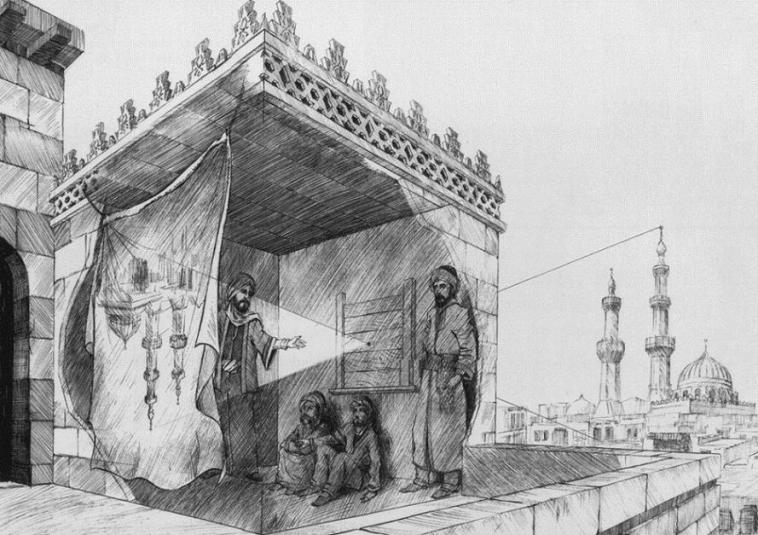
Who was the Founder of the First Camera? The basic principles of camera making were initiated by an Islamic scholar about 1,000 years ago. The principle of the camera’s creation was a legendary Islamic scientist named Ibn al-Haitham. At the end of the 10th century AD, al-Haitham managed to find a camera obscura. That was one of al-Haitham’s most historic works. This very inspiring discovery was successfully made by al-Haitham together with Kamaluddin al-Farisi. Both of them managed to research and record the phenomenon of camera obscura. The discovery began when both of them studied solar eclipses. To study the phenomenon of eclipses, Al-Haitham made a small hole in the wall that allowed a semi-real image of the sun to be targeted through a flat surface. The study of optics in the form of a camera obscura is the basis behind the performance of the camera that is currently used by humanity. According to Webster’s dictionary, this phenomenon is literally interpreted as “dark space”. Usually it is in the form of carbon paper with a small hole for light to enter. The theory that Al-Haitham solved inspired the invention of the film which was then connected and played to the audience. “The first camera obscura was made by the Islamic scientist, Abu Ali Al-Hasan Ibnu al-Haitham, who was born in Basra (965-1039 AD),” stated Nicholas J Wade and Stanley Finger in their work entitled The eye as an optical instrument: from camera obscura to Helmholtz’s perspective. “The world knows al-Haitham as an explorer in the field of optics who is famous through his book entitled Kitab al-Manazir (book of optics). To prove the theories in his book, the legendary Islamic physicist then compiled Al-Bayt Al-Muzlim or better known as the camera obscura, or dark room. Bradley Steffens in his work entitled Ibn al-Haytham: First Scientist revealed that Kitab al-Manazir was the first book to explain the working principles of the camera obscura. “He was the first scientist who succeeded in projecting the entire image from outside the house into the image with the camera obscura,” said Bradley. The civilization of the modern world is certainly very indebted to the Islamic physicist who was born in the City Basrah, Iraq. Al-Haitham wrote more than 200 scientific works during his lifetime. All of them were dedicated to the advancement of human civilization. Unfortunately, Muslims were more fascinated by the achievements of Western technology, so they did not appreciate and appreciate the achievements of Islamic scientists in the era of Islamic glory. The term camera obscura that al-Haitham discovered was introduced in the West around the 16th century AD. Five centuries after the discovery of the camera obscura, Cardano Geronimo (1501-1576), who was influenced by al-Haitham’s thinking, began to replace the eyepiece with a lens (camera). After that, the use of lenses in the camera obscura was also done by Giovanni Batista della Porta (1535-1615 AD). Some also say that the term camera obscura that al-Haitham discovered was first introduced in the West by Joseph Kepler (1571-1630 AD). Kepler improved the function of the camera by using a negative lens behind the positive lens, so that it could improve the image projector (the principle is used in the world of modern long-distance image lenses). After that, Robert Boyle (1627-1691 AD), began to design a small camera, without cables, the type of camera box obscura in 1665 AD. After 900 years from al-Haitham’s discovery, photographic plates were first used permanently to capture images produced by a camera obscura. The first permanent photograph was taken by Joseph Nicéphore Niepce in France in 1827. In 1855, Roger Fenton used negative glass plates to take pictures of English soldiers during the Crimean War. He developed the plates in his darkroom-turned-wagon. In 1888, George Eastman developed the working principle of al-Haitham’s camera obscura very well. Eastman invented the Kodak camera. Since then, cameras have continued to change according to technological developments. A version of the camera obscura was used in the First World War to observe aircraft and measure performance. In the Second World War, the camera obscura was also used to check the navigation accuracy of radio devices. That is how the invention of the camera obscura achieved by al-Haitham was able to change world civilization.
http://www.wasap.my/60136043241/LanskapLuarbiasa
-
PHOTOGRAPHY: COLORS & EMOTIONS, KLPF 2025

Photography Exhibition: COLOR and EMOTIONS. 📍 Wang Kelian View Point.
-
PHOTOGRAPHY: COLORS & EMOTIONS, SHAH ALAM GALLERY

Photography Exhibition “Color Emotion Expressions” 21 July~28 August 2025, Shah Alam Gallery.
-
LENS & LIFE: A MAGICAL JOURNEY
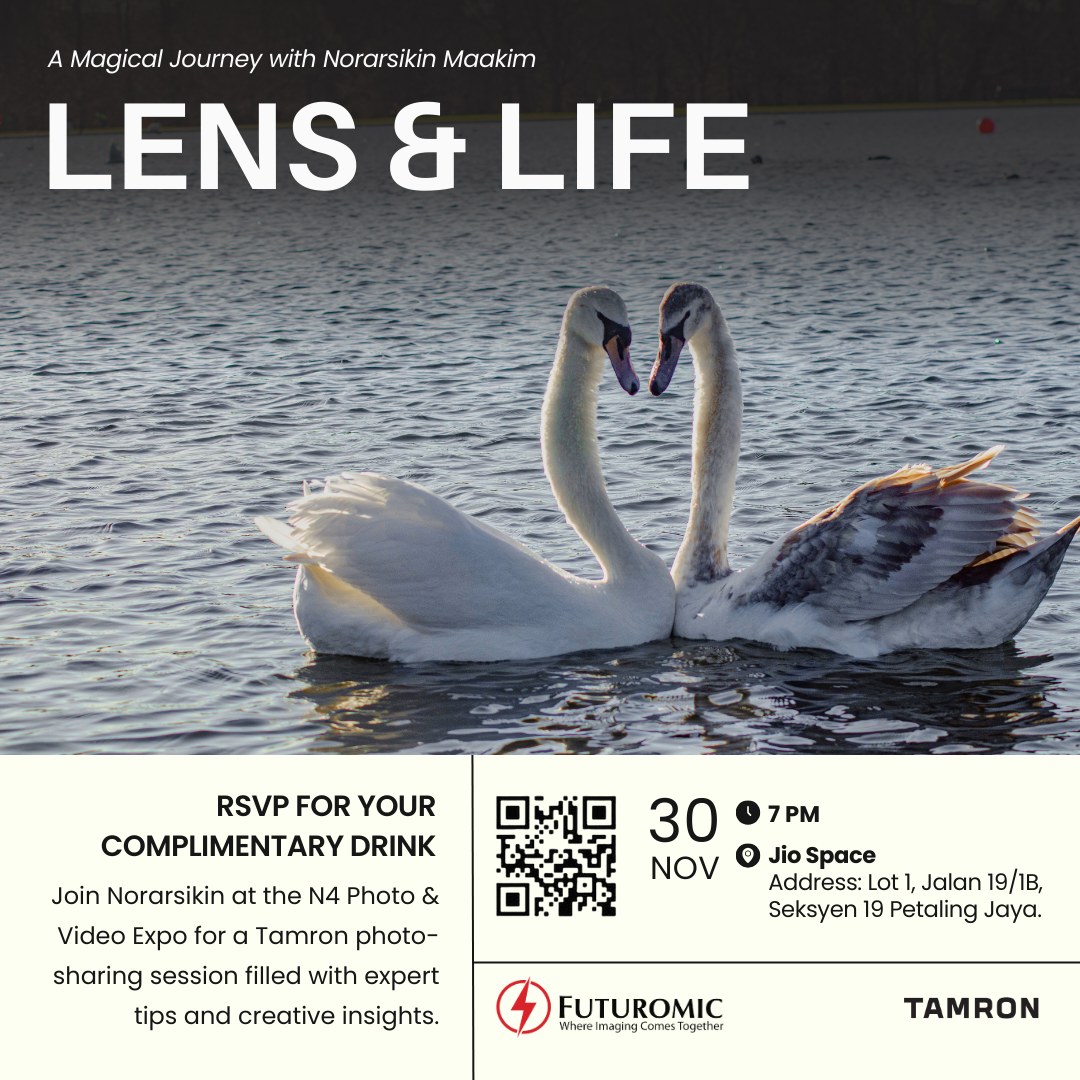
Discover her passion for photography, hear her inspiring stories, and pick up creative tips to elevate your skills – whether you’re a beginner or a pro!


12 Comments
Comments are closed.